
Views: 0 Author: Site Editor Publish Time: 2025-08-27 Origin: Site


When planning architectural projects or exterior renovations, understanding the specifications of building materials is crucial for success. Among the most important considerations for aluminum composite panels is thickness—a factor that significantly impacts performance, applications, and cost. This comprehensive guide explores everything you need to know about ACM panel thickness, helping architects, contractors, and property owners make informed decisions for their projects.
Aluminum composite panels, commonly known as ACM panels, have revolutionized modern architecture with their versatility, durability, and aesthetic appeal. Before diving into thickness specifications, it's essential to understand what these panels are and why thickness matters.
Aluminum composite panels are engineered building materials consisting of two thin aluminum sheets bonded to a core material. This sandwich-like structure creates a material that offers the perfect balance of lightweight construction and structural rigidity.
The typical components of an ACM panel include:
Exterior aluminum face (coated with protective finish)
Core material (typically polyethylene, fire-retardant material, or mineral-filled core)
Interior aluminum face (often with a service coating)
The thickness of ACM panels isn't just a technical specification—it directly affects:
Structural performance and rigidity
Weight and handling requirements
Installation methods and systems
Suitable applications
Weather resistance and durability
Cost and material efficiency
Compliance with building codes
Selecting the appropriate ACM panel thickness is critical for ensuring that your project meets both aesthetic and functional requirements while staying within budget constraints.
Aluminum composite materials are manufactured in a range of standard thicknesses to suit different applications and performance requirements. Understanding these options is the first step in making the right selection for your project.
The most common ACM panel thickness options available in the market include:
2mm (approximately 1/12 inch)
3mm (approximately 1/8 inch)
4mm (approximately 5/32 inch)
6mm (approximately 1/4 inch)
8mm (approximately 5/16 inch)
Of these options, 3mm and 4mm panels are the most widely used for exterior applications, while 2mm panels are often used for interior applications or signage.
It's worth noting that ACM panel thickness may be expressed differently depending on the region:
Metric measurements (millimeters) are standard in most global markets
Imperial measurements (inches) are sometimes used in North American markets
Some manufacturers may list both for clarity
When reviewing specifications, always confirm whether the thickness refers to the total panel (including both aluminum faces and the core) or just the core material.
Different thickness options offer varying benefits and limitations. This comparison will help you understand which option might be best for your specific application.
| Thickness | Weight Range | Typical Applications | Rigidity | Cost Factor |
|---|---|---|---|---|
| 2mm | 2.5-3.0 kg/m² | Interior panels, signage, display boards | Low | Lowest |
| 3mm | 3.5-4.5 kg/m² | Low-rise exteriors, interior partitions, column covers | Medium | Low-Medium |
| 4mm | 5.0-6.0 kg/m² | Standard exterior cladding, fascias, canopies | High | Medium |
| 6mm | 7.0-8.5 kg/m² | High-performance exteriors, coastal applications | Very High | High |
| 8mm | 9.0-11.0 kg/m² | Special applications, high wind load areas | Extremely High | Highest |
As ACM panel thickness increases:
Rigidity increases exponentially (a 4mm panel is significantly more rigid than a 3mm panel)
Wind load resistance improves
Thermal insulation properties generally improve
Sound insulation properties improve
Material and installation costs increase
Weight increases (affecting structural requirements and handling)
Different applications call for different panel thicknesses. Understanding which thickness works best for specific uses will help you make the right choice for your project.
The thinnest standard option, 2mm panels are ideal for:
Interior wall cladding and decorative elements
Exhibition stands and displays
Signage and wayfinding systems
Point-of-purchase displays
Furniture and fixture components
These panels offer sufficient rigidity for applications not subject to significant physical stress while providing cost savings and easier fabrication.
A 3mm ACM panel provides a balance of performance and cost-effectiveness, suitable for:
Low to mid-rise building exteriors
Interior partition walls
Column covers and beam wraps
Soffit applications
Signage with larger dimensions
Transportation applications (bus, train interiors)
The 3mm thickness has become popular for its versatility and value, offering adequate performance for many applications without the additional cost of thicker panels.
The 4mm ACM panel has become the industry standard for exterior cladding due to its excellent balance of performance and cost. It's commonly used for:
Commercial building facades
Retail storefronts
Office exteriors
Educational facilities
Healthcare buildings
Industrial facilities
This thickness provides excellent rigidity and durability for exterior applications while remaining cost-effective and relatively easy to fabricate and install.
These thicker panels are reserved for specialized applications requiring exceptional performance:
High-rise buildings
Areas with extreme wind loads
Coastal environments
Curved facade elements with large radii
Areas with stringent deflection requirements
Projects requiring maximum panel sizes
While these thicker panels offer superior performance, their increased cost and weight make them suitable only when their specific benefits are required.
When evaluating ACM panel thickness options, several technical factors should be considered to ensure optimal performance and compliance with building requirements.
Wind load capacity increases with panel thickness. Consider:
Building height (taller buildings experience higher wind loads)
Geographic location (coastal and high-altitude areas have higher wind requirements)
Local building codes (which specify minimum performance requirements)
Panel orientation and size (larger panels may require greater thickness)
For example, a 4mm panel typically offers 1.5-2 times the wind load resistance of a 3mm panel, making it more suitable for taller buildings or windier locations.
The maximum distance between supports (span) depends directly on panel thickness:
3mm panels: Typically limited to 500-700mm spans
4mm panels: Can span 700-900mm
6mm panels: Can span 900-1200mm
8mm panels: Can span 1200mm+
Exceeding recommended spans can result in visible deflection (bowing) and potential long-term performance issues.
Panel weight increases proportionally with thickness:
A 4mm panel weighs approximately 30-40% more than a 3mm panel
This weight difference affects structural requirements, handling procedures, and installation costs
Heavier panels may require more robust substructure and additional installation labor
All thicknesses of aluminum composite materials expand and contract with temperature changes, but thicker panels may require more attention to expansion joint details due to the potentially greater forces involved.
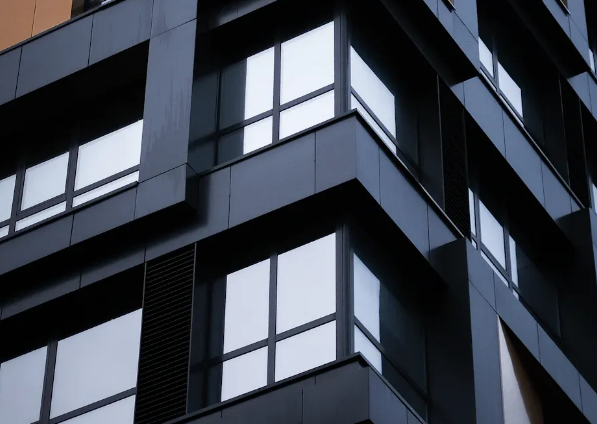
The thickness of ACM panels affects how they can be fabricated and installed, which has implications for project planning and execution.
Different fabrication techniques may be more or less suitable depending on panel thickness:
Routing and folding: Works well with 3mm and 4mm panels; 2mm may be too thin for complex folds, while 6mm+ may be too thick for tight folds
V-grooving: Suitable for all thicknesses but requires adjusted tooling
Flat cutting: Works with all thicknesses but may require different cutting speeds
CNC machining: Works with all thicknesses but requires programming adjustments
Panel thickness can influence the appropriate installation system:
Wet seal systems: Work well with 3mm and 4mm panels
Dry mechanical systems: Suitable for 3mm+ panels, with thicker panels offering better performance
Cassette systems: Typically require 4mm or thicker panels for adequate edge folding strength
Riveted/screwed systems: Work with all thicknesses but may require different fastener types
The thickness of the panel affects edge treatment options:
Thinner panels may require edge covers or trims to create a finished appearance
Thicker panels can more easily incorporate folded returns for a cleaner edge
Exposed edges of thicker panels are more visually prominent and may require additional finishing
Understanding the cost impact of different thicknesses helps with budgeting and value engineering decisions.
As thickness increases, so does the cost:
A 4mm panel typically costs 20-30% more than a 3mm panel
A 6mm panel may cost 40-60% more than a 4mm panel
These differences reflect the additional aluminum and core material required
The total installed cost includes more than just the panel price:
Thicker panels may require more robust (and expensive) substructure
Installation labor may increase with panel weight
Fabrication costs may vary by thickness
Transportation costs increase with weight
When evaluating thickness options, consider long-term value:
Thicker panels generally offer longer service life
Reduced maintenance requirements may offset higher initial costs
Improved performance can enhance building energy efficiency
Better durability can mean fewer repairs and replacements
Recent trends in the architectural industry have influenced preferences for certain ACM panel thicknesses.
Based on recent project specifications and manufacturer reports:
4mm has become the predominant choice for exterior applications globally
3mm remains popular for cost-sensitive projects and certain regions
Interest in 2mm panels is growing for interior applications due to sustainability concerns
6mm usage is increasing for high-performance requirements
The trend toward more sustainable building practices is influencing thickness selection:
Thinner panels use less raw material
Reduced weight means lower transportation emissions
However, durability and longevity must be balanced against material reduction
Recent innovations are changing the relationship between thickness and performance:
Improved core formulations are enhancing the rigidity of thinner panels
Advanced manufacturing techniques are improving flatness across all thicknesses
New alloys are providing better strength-to-weight ratios
Making the optimal thickness selection involves considering multiple factors specific to your project requirements.
When determining the appropriate ACM panel thickness, consider:
Application type: Interior vs. exterior, low-rise vs. high-rise
Environmental conditions: Wind loads, temperature extremes, coastal exposure
Panel size: Larger panels benefit from greater thickness
Substructure design: Spacing of supports affects thickness requirements
Aesthetic goals: Visual flatness requirements, edge appearance
Budget constraints: Initial costs vs. long-term performance
Building code requirements: Local regulations may dictate minimum performance criteria
Follow these steps to select the optimal thickness:
Identify the application and performance requirements
Consult local building codes for minimum standards
Determine maximum panel sizes and support spacing
Calculate anticipated wind loads based on building height and location
Consider fabrication and installation methods
Evaluate budget constraints
Consult with manufacturers for specific recommendations
For complex projects, consult with:
Architectural facade specialists
Structural engineers
Experienced ACM panel manufacturers like Goodsense
Facade contractors with ACM installation experience
Goodsense, a leading manufacturer of aluminum composite materials, offers a comprehensive range of panel thicknesses to meet diverse project requirements.
Goodsense provides aluminum composite panels in all standard thicknesses:
2mm for interior and signage applications
3mm for versatile use in both interior and exterior contexts
4mm as their primary recommendation for exterior cladding
6mm for high-performance requirements
Custom thicknesses for specialized applications
Goodsense ensures the consistency and reliability of their panels through:
Rigorous thickness tolerance control (typically ±0.2mm)
Comprehensive testing for structural performance
Quality control throughout the manufacturing process
Compliance with international standards
Beyond standard thickness options, Goodsense offers:
Aluminum core composite panels for enhanced rigidity
Aluminum honeycomb panels for ultra-high strength-to-weight ratio
Custom solutions for specialized project requirements
The thickness of ACM panels can affect long-term maintenance requirements and performance.
Panel thickness influences durability in several ways:
Thicker panels generally resist impact damage better
Greater rigidity reduces the risk of permanent deformation
Enhanced structural integrity can mean fewer maintenance issues
Regardless of thickness, all ACM panels benefit from:
Regular cleaning with mild detergent and water
Prompt attention to any damage
Periodic inspection of joints and attachments
Maintenance of drainage and ventilation systems
If panel replacement becomes necessary:
Matching the original thickness is critical for visual consistency
Structural attachments must be appropriate for the panel thickness
Edge treatments should be replicated for aesthetic continuity
A1: Standard ACM panels are available in thicknesses ranging from 2mm to 8mm, with 3mm and 4mm being the most common for architectural applications. The total thickness includes two aluminum faces (typically 0.3-0.5mm each) plus the core material.
A2: ACP (Aluminum Composite Panel) and ACM refer to the same product. Standard thicknesses are 2mm, 3mm, 4mm, 6mm, and 8mm, with each thickness designed for specific applications ranging from interior signage to high-performance exterior cladding.
A3: A 3mm ACM panel is a composite material consisting of two aluminum sheets bonded to a core, with a total thickness of 3 millimeters. This versatile thickness is commonly used for signage, interior applications, and exterior cladding on low to mid-rise buildings.
A4: 4mm ACM is the industry-standard thickness for exterior cladding applications. At this thickness, panels offer an optimal balance of rigidity, weight, and cost-effectiveness, making them suitable for most commercial building facades and architectural applications.
A5: Wind load resistance increases significantly with panel thickness. A 4mm panel typically offers 1.5-2 times the wind load resistance of a 3mm panel, while a 6mm panel provides even greater resistance, making thicker panels more suitable for taller buildings and high-wind areas.
A6: While thinner panels cost less initially, they may not provide adequate performance for exterior applications. Using panels that are too thin can result in oil-canning (visible waviness), premature failure, and higher long-term costs. Always follow manufacturer and engineer recommendations.
A7: ACM panel fire resistance is primarily determined by the core material composition (PE, FR, or A2), not the thickness. However, thicker panels with mineral-filled cores may offer marginally better fire performance due to increased mass, though this should never be the primary fire safety strategy.
Selecting the appropriate ACM panel thickness is a critical decision that impacts the performance, aesthetics, and cost of architectural projects. While thinner panels offer cost savings and reduced weight, thicker panels provide enhanced rigidity, durability, and performance in demanding applications.
For most exterior architectural applications, 4mm panels have emerged as the industry standard, offering an excellent balance of performance and value. Interior applications can often utilize 2mm or 3mm panels effectively, while specialized high-performance requirements may call for 6mm or even 8mm panels.
By understanding the relationship between thickness and performance, and by considering the specific requirements of your project, you can make an informed decision that ensures both immediate satisfaction and long-term success. Consulting with experienced manufacturers like Goodsense can provide valuable insights tailored to your unique project needs.
Whether you're cladding a commercial high-rise, creating a distinctive retail storefront, or designing interior spaces, the right ACM panel thickness is a fundamental consideration that deserves careful attention. With the information provided in this guide, you're well-equipped to make choices that balance performance, aesthetics, and value for your next project.

